“‘Why should we not hope that righteous desires and Christlike yearnings can still be marvelously, miraculously answered by the God of all hope?’ We all need to believe that what we desire in righteousness can someday, someway, somehow yet be ours.” – Elder Jeffery R. Holland
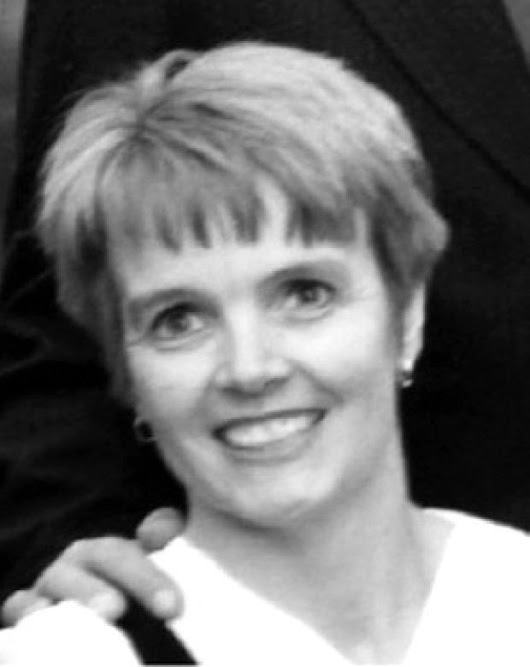
The principle of hope best describes the second part of my mom’s story. As the disease SCA7 decreased her abilities, her hope increased in a day without sufferings and the restoration of her abilities in the Resurrection. Jesus Christ is the source of all hope because He is the only one who can promise wholeness and eternal joy. Hope is a very powerful and sustaining thing; it can help anyone to endure with joy and peace amidst a storm. Hope provides comfort when things are turbulent because it provides a vision of how things will be in the next life. This is what my mom found through hope as the disease progressed.
At this point in the story, my mom had already been showing signs of SCA7 for around five years. Her eyesight had been affected minimally, and she was still driving. We had just moved to a new home in Orem, UT, and then my mom’s sister Cathy passed away. This marked the beginning a ten year period of my mom’s life in which the disease would progress to the point that she could no longer drive and her balance would decline such that using a walker was required. Yes, things were not easy during this period, but she still enjoyed many parts of her life with few limitations. Family and great friends sustained and served her, and she felt her life charmed and good. Following this period, the next five or so years would bring her sufferings to a deeper level, as well as her faith and most especially her hope. This is the time when the depression began to strike and a wheelchair became necessary. Additionally, speech, eyesight and hand-coordination became more of an issue. The heaviness of this disease began to weigh upon her.
NEXT 10 YEARS (~1989 – 1999):
In the beginning of this 10 year period, my mom’s eyesight was still fairly good. At first she mainly experienced onset color blindness. I remember while driving with my mom having to sit close to her, so I could tell her what color the light was. “It just turned yellow, Mom.” And while sitting at the red light, I or my siblings would tell her when it turned green. I never remember feeling unsafe, and my mom had no accidents during this time. As her eyesight worsened over the next couple years, she would avoid the freeway and stayed fairly close to home. My younger sister Aubree remembers my mom once running over a curb on a turn and then saying, “I probably shouldn’t be driving anymore.” So a few years after our move, my mom did give up driving. I am sure she drove a couple times on small trips after this decision was made (because I myself have done this!). Plus, my brother Dan vaguely remembers her doing it.
When speaking of the inability to drive to a large group of women, my mom referred to it as a “real pain.” I myself have not been able to drive because of this disease for over 10 years now, and “real pain” doesn’t even begin to describe how hard it really is! With five kids to care for, I am sure my mom felt the pain of this loss daily because I definitely do. There was grocery shopping, other shopping, doctor and dentist appointments, kids’ school issues and sports, recreational outings, and so on. My mom made lots of phone calls asking neighbors and friends for rides. She did not like having to do this because she did not want to be a burden to others. This is something we her family knew very well. She only called for a ride when it was necessary. And when she did call, she would often say something like, “When are you next going shopping…?” My mom learned to plan her outings strategically. Things like grocery shopping and other errands were done when my dad got home from work. We found a dentist close to home, so we could walk to our appointments. We would ride the bus to BYU to go swimming. I have lots of memories riding the bus. Also, we had to say “no” to a lot of things like sports or different activities because it was not worth finding a ride. This limitation or pain really was felt daily.
About a year after my mom stopped driving, our family moved to Virginia for a year. My dad accepted the opportunity to take a sabbatical from teaching at BYU in order to get more experience working for NASA. We rented our house in Utah, and we drove across the country. In Yorktown, Virginia we moved into a three bedroom apartment. It was smaller than our home, but given it was only for a year, we tried to enjoy living there while it lasted.
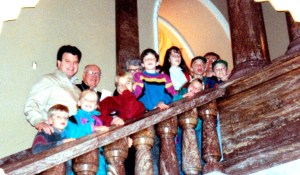
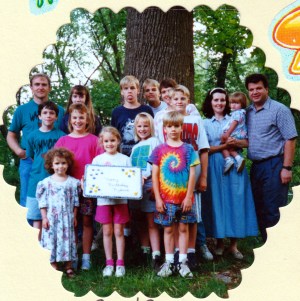
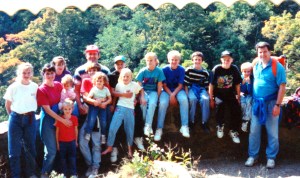
Two things helped my mom not feel stuck in that small apartment all day, every day: 1) help from others and 2) vacations or outings. My mom quickly made friends with those who went to our same church, which we actively attended. Some of these friends willingly gave my mom or us rides. I remember calling home sick at school, and my mom called someone to pick me up. I was in fourth grade at the time, and I remember being nervous because we were new and thinking my mom wouldn’t be able to find me a ride. But she did! The kindness and service of these friends were a great blessing to my mom and our family. The other great blessings were outings and vacations. When my dad arrived home from work in the evenings, we got out most nights to run errands or to go to church or family activities. Almost every weekend we went to visit historical sights in Virginia and the surrounding areas, and there are a lot! I remember getting sick of seeing yet another Civil War battle site. We saw them all! It was fun though because we did most of these outings with friends. A good friend of my dad’s from high school just happened to be a part of our same church congregation there. He, Scott, and his wife, Sarah, had a super-fun, large family of 8 kids that were our same ages. They joined us on most of our outings. Not only did we see the historical sites with them, but we also went to amusement parks, Washington DC, camping, and the beach. We made lots of memories with this family for the year we lived there. I know my mom stayed good friends with Sarah for the rest of her life. Other memorable vacations during this year include a church history tour with my grandma Canfield, who was visiting, and Christmas at the Florida Keys. These outings and vacations, as well as the loving service of others, helped lighten my mom’s burden of not being able to drive.

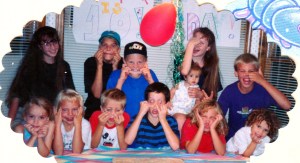
While in Virginia, my mom’s dad, Grandpa Paul, was not doing well, and he peacefully passed away. The possibility of Grandpa dying while away was a major concern my mom had about going to Virginia. She worried that she wouldn’t be there for her mom and dad, since she knew his health was poor and deteriorating. My parents determined that only my mom would fly back to Utah for the funeral because it was too expensive to fly our entire family. The family drove to the airport to drop her off. After arriving, my parents told us that they had gotten special permission to let us go on the airplane to see it, since we had never been on an airplane. We thought that was super cool! We boarded the airplane, and my parents invited us to sit down and check it out. Eventually, we started to get anxious because the plane was shutting the door, and we believed we would be stuck on the plane. When the plane started moving, we yelled, “STOP! We need to get off!” My parents then told us that my Grandpa’s church congregation pooled together money to fly our entire family to the funeral. We really enjoyed getting to see our family and to say good-bye to my grandpa.
My dad completed his sabbatical, and we returned home to Utah. By now my mom’s balance was becoming more noticeable, but she could still walk unassisted. The biggest help came only half a year after we returned home from Virginia. My oldest brother, Josh, turned 16 years old and got his drivers license! I believe my mom was looking forward to this day more than Josh was. The day he turned 16 years old he had his license and a car. My brother cherishes this time because of the many hours he spent with my mom. He remembers driving all over town with her to find the right gifts for birthdays, for example. They talked a lot while driving, and she was excited to hear about his day. Whatever the issue in his life, she was always on his side. He felt like he could tell her everything, and he did. They connected and bonded through this time together. All of us kids have memories of the time we had with our mom, once we got our divers license. We drove her wherever she needed to go. Being able to serve our mom like this helped us grow up and be a little better. Even with her kids driving, there were still many times when she had to call neighbors and friends (teenagers do tend to be busy). Of this she said, “I can’t drive and its a real pain, but I can’t help but think of the great friendships I have made because of the time I spend with people while they take me places.” It is true that my mom had many really great friends throughout her life because she needed their help and they selflessly served her.
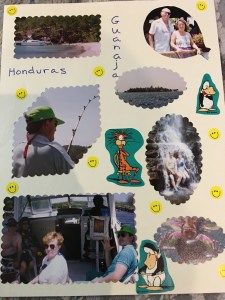
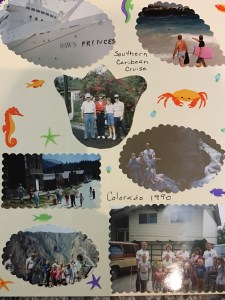
Another blessing was that the many vacations continued. Not being able to drive often results in a feeling of being stuck at home, so vacations helped my mom to feel the opposite. We usually had a fun trip planned, and if there was good weather, then we went somewhere that weekend. I think we explored, experienced and camped at most places Utah has to offer, which is a lot! My mom had packing and camping down to an art. I loved all the meals she made us. For some reason her cream corn and frito chili pie were always so good when cooked on the camp stove. On our many road trips my mom always had goodies for us to snack on. In the winter time, we would go to our Bear Lake cabin to ice skate. We also did a lot of snow skiing trips around Utah. We often did night skiing since it was more affordable for a family. My mom still skied with us, taking careful and intentionally wide turns down the mountain, so she wouldn’t go too fast and get out of control with her bad balance. Also, my dad would have to travel sometimes for his work. Whenever he did, he would take my mom with him and make a trip out of it. They were able to travel to amazing places, and they often invited their parent(s) to join them. They traveled to France, Egypt and Israel on one trip, and to Chile and Argentina on another. They also went to Italy, Germany, Austria, Canada, and Costa Rica. Besides these trips, they also enjoyed going on cruises together to places like Panama Canal, the Caribbean, Alaska, St. Petersburg, New York, Cancun, and Canada. My mom loved all the travel and vacations. She felt blessed for all she experienced despite having this disease.

A couple years after returning from Virginia is when my mom’s balance began to be noticeable. Before this her balance was getting worse. For example, she couldn’t run, and she had to walk slower than usual. Still it was not that noticeable. I remember once when we were trying to catch the bus to go somewhere and we were late. My mom told us to run ahead to the bus stop to ensure it stopped. I tried to push my mom to start running with us, so we wouldn’t leave her behind. She resisted my urging, telling me she couldn’t run because of this disease. This was news to me. Her balance issues became more visible when she started to stagger and walked with her feet wider apart. An outside observer might have remarked that she appeared drunk. As my mom’s balance got worse, she began to fall at home when she was doing her work around the house. My dad did not like her falling, so he suggested she use a walker. They were able to find her a walker that helped her and made things easier for her. My mom was not against using a walker. What she mostly cared about was her freedom and ability to do things. A walker helped her with this, so she used it.
Where my mom struggled the most with worsening balance was on vacations. We often went boating at our Bear Lake cabin, and my mom loved to water ski there. One time she tried and tried to get up on a slalom ski (usually a simple act for her), but she could not. She came into the boat with tears in her eyes, defeated. Everyone else in the boat had tears too. It was hard for her to have the things she loved taken away. Eventually, snow skiing became too hard for her, and she had to give that up too. On all our trips my mom loved to be right there with all of us, experiencing everything we did. She did not like being left behind! I remember a particular river rafting vacation that we did. While I don’t recall where it was, I clearly remember preparing to raft. We had a couple rafts of our own, and a couple of my cousins’ families were with us. My dad and his brothers hiked along the river to scout out the rapids and plan our course. When they returned, they were concerned because the rapids were bigger than expected. My dad told our family that he was OK if all the kids went as we were older and pretty good swimmers. He then told my mom that he was uncomfortable with her going. He believed her lack of coordination and poor balance could potentially put her in a dangerous situation. Well, my mom did not agree, and she felt certain that she would be OK. When she told my dad this, he did not budge. For those who know my parents well, they know that my dad can be very firm and confident in his decisions. My mom was not afraid to stand up to him and tell him what she thought. She could be very feisty. After she told my dad what she thought, she was so upset that she left the party to go jump in the river. At this point in the disease, my mom was using a walker. I remember going down to the river to make sure she was OK. So many years later I can’t remember if she actually ended up going with us or not, but I do remember how much she really did not like the thought of being left behind. She longed to always be there with her family, enjoying life.
Vacations became harder and harder for her. There were times when a hard hike would come up, and my mom stayed behind in the car, waiting for all of us. I know she did not like having to stay behind, but she in the end she wanted us to have the experience more. It was one more way she sacrificed for our lives to be better. One such time, we parked the car on the side of the road in Southern Utah to hike the Black Hole. This is a long, deep canyon hike that is very technical, even requiring swimming through a very narrow slot canyon. The exit is a couple miles down the road from the starting point. The plan was to let my brothers make the 2 mile walk along the road back to the car, and then they would drive the car to pick up the rest of us at the trail’s end. Surprisingly, at the end of this long and tiring hike, my brothers were super-pleased to find the car already parked at the exit with my mom inside, waiting for us. This was surprising, even shocking, because my mom hadn’t driven for many years and her eyesight was limited. She told us that she drove slowly and followed the lines on the road that she could see. We all had a good laugh. My mom was determined to do all that she could do.
My dad worked to find places and things for us to do that my mom could enjoy too. One thing they discovered was scuba diving. This activity does not require balance and much of the seeing is up close, so my mom could see OK. They both loved the adventure of exploring new things and all the places it took them. Their diving log had 57 dives in California, Barbados, Virgin Islands, Bear Lake, Cozumel, Honduras, Florida, Grand Canyon, Costa Rica, Hawaii, Bahamas, and even the Red Sea. Even though this disease limited my mom’s abilities, she still got out and experienced much. My parents truly enjoyed their adventures together.


By the end of this 10 year period, she had used a walker for several years, and her eyesight was such that she could still see much. However, most details were “washed out” and bright light was altogether blinding. Despite these things, my mom really felt that her life was very good and blessed. She knew just how hard this disease could be from watching her dad and siblings suffer with it. Plus, her younger sister Carolyn was still living and much further progressed than my mom. That was a big reminder to my mom of how lucky she was to have the abilities that she did have. She was grateful for all the places she was able to go and the many experiences she could still enjoy. She was grateful for her family and all the time she was able to spend with them. She was also grateful for her faith and hope in Jesus Christ, which gave her a deep sense of peace and joy.
NEXT 5 YEARS (~1999 – 2004):
This next five year period is the time when things started to get particularly difficult. Depression slowly crept in. My mom had a fiery personality, and it seemed to be easier and easier to set her off. Aubree, her youngest, was now a teenager, so my mom had a house full of teenagers! This really didn’t help! We made many messes; we argued with her; we told her what we thought she was doing wrong. Teenagers are hard enough, and then with everything else she had to deal with physically, it just got too hard to control her emotions too. It seemed she yelled at us frequently and often was close to tears. My parents decided that it was time for her to try depression medication. The change in my mom was noticeable. She seemed calmer and happier. Our whole family felt that medicine was a wonderful blessing! It didn’t magically solve everything. It just made it so that things were more manageable. My mom still had to work at trying to stay up beat and happy. Mom often took time to count her blessings when she felt down or discouraged. When I was in high school, I once walked in on her singing the hymn, “Count Your Many Blessings” to herself. I know that was a day she was having a hard time. She counted her blessing and tried to see the good and positive in her life. She would often verbally list her blessings to me. Depression is something that my mom had to deal with for the rest of her life.
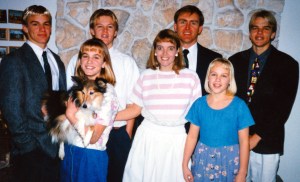
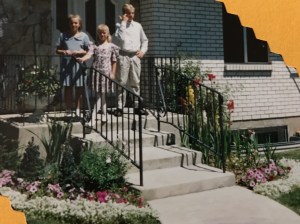
This is also the time when using a walker became more difficult. Around the house, she had fallen several times. The time had come for her to start using a wheelchair, but this is something she really didn’t want to do. Not just because of how people would perceive her, but mostly because it would limit her mobility. It was going to be harder for her to complete her daily tasks from a wheelchair, and it meant getting around the yard and garden would be much harder, something she LOVED. The flowers around our house looked amazing, and my mom had created a large raised garden bed in our backyard where she grew all kinds of fruits and vegetables. Her favorite place to shop was the greenhouse; she brought home many lovely plants. She spent a significant amount of time in the yard gardening. So even after switching from walker to wheelchair, she took her wheelchair outside, lowered herself out of it, and then scooted across the ground to care for her plants. My dad and Luke built ramps to all the doors to help out during this transition. This all happened when Aubree was in 8th grade, I a Sophmore, Luke a Senior, Dan on his mission, and Josh 21 years old (just returned from his mission). We saw the pain in Mom’s eyes as these abilities were taken away.
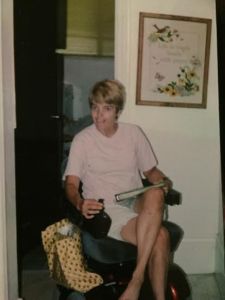
Soon after my mom started using a wheelchair, my mom and dad discovered an electric wheelchair called a “Jazzy” that could give my mom more mobility. It could drive around on the grass, so she could more easily get around to garden. This Jazzy was even covered by our medical insurance. My mom LOVED this new freedom, and she rode around her Jazzy with pride. We purchased a portable ramp, so she could ride it into the car and take her Jazzy to church and other places. One issue though was that my mom would accidentally drive into the walls around our house, and the foot rests would poke holes in the drywall. After she punched several of these holes in the walls, my dad found some foot high base boards that he and his brother put up throughout the house to cover up all the holes and stop more from being made. She sure loved this new found freedom!!!
My mom began to loose other physical abilities, and it negatively affected her work as a homemaker. Worsening eyesight began to make a lot of things harder. My mom loved scrap-booking. She made scrapbooks for each family member, filled with life memories. She worked very hard to finish each person’s book. With limited vision, every once in a while she would put a picture upside down or crooked and her decorating stickers would be off. My sister, Aubree, and I would secretly check her work to fix it without her knowing. We knew it would hurt her feelings and cause her frustration, so we kept it to ourselves. Another thing that was affected on more than one occasion was her cooking. One time she made a macaroni dish, but she failed to notice that weevils had infested the box of noodles. That night when our family sat down for dinner, we saw cooked “maggots” in the food! My mom felt embarrassed about it, but we often later joked about “maggot-roni.” Another time we found a dish rag in a dinner casserole! These are examples of small things that we would notice as “mistakes” that my mom would make in her homemaking. Despite these imperfections, she was a hard worker and sacrificed daily for us. She would wake up with us before school to make breakfast for the family, then pack lunches, and have dinner ready in the evenings. It wasn’t uncommon to come home from school to find my mom mopping our large white linoleum kitchen floor on her hands and knees (she was unable to stand up and do it). We so appreciated everything she did for us, even if it was imperfect, and I was amazed then and still am today at how much she could do despite her disabilities.
In addition to her depression, being wheelchair bound, and suffering from eyesight loss, my mom also struggled with speech, writing and eating. The disease affects voluntary movement, including the tongue. It causes it to be less coordinated and slow. This results in slurred and slow speech. When this starting happening to my mom, she hired a speech therapist to teach her exercises to strengthen muscles and coordination. It did help some, but you could still hear the disease when she spoke. Her finger movements were affected in the same way, so writing became difficult. Writing by hand took her a while and became sloppier, even a simple signature. As mentioned, the coordination and movement of her tongue, and even that of the mouth and throat, were slowed and hampered, so eating became more difficult. This led to occasional choking. At the same time that eating and swallowing were harder, it became harder to cough, so when she would choke, she would at times have to hack loudly to clear her throat. I have many memories during family dinners when she would start to choke and then loudly hack to clear it up. At times she would even vomit due to the choking. Every once in a while she would need the Heimlich to dislodge food. There was an incident when my oldest brother Josh came home one day to pick up my mom and take her out. They ordered hamburgers while out and ate them in the car. My mom began to choke on her burger. Josh said that he knew it was bad because she couldn’t even breathe to cough. He quickly pulled the car over and ran to the passenger side to give her the Heimlich. He remembers having to work pretty hard to dislodge the food. It was a scary experience for both of them. This experience was the exception though. Most times my mom could clear her throat by coughing. With my mom’s speech, writing and eating issues (in addition to her other named disabilities), she not only looked handicapped, but she sadly now felt very handicapped too.
My mom began to hope for healing and freedom from the effects of the disease like she had never hoped before. She longed for the day when she would not have to deal with this disease. On Easters my parents regularly spoke of the resurrection of Jesus Christ, who opened the door so that all humankind will one day also be resurrected with perfect bodies, freed from disability. During such discussions I remember looking at my mom sitting in her wheelchair and imagining her without this disease. These were wonderful thoughts! I could even sense my mom’s hope and longing for this universal gift. Also, like other Christian faiths, we in our church believe that Jesus Christ will come again to this earth in great power and glory and establish His kingdom for 1,000 years. He will come with healing in His wings, ushering in the millennium during which time there will be no sickness or ailments. And we also believe that we now live in the last days and that His second coming and the start of the Millennium will be soon. My mom hoped so much that the Second Coming would happen in her lifetime, so that her suffering would cease and she would be healed now. She spoke of this often, hoping for it to come. She truly began to hope!
I will always remember an experience when I witnessed the strength of my mom’s hope in the Savior. My mom had scheduled a ministering appointment with women from her church congregation. As should could not go to their house, they came to ours. There were four or five other women present that day, and they all had known my mom for many years. They had seen the disease progress and cripple my mom; they knew how hard it was for her. I joined them since I was home and knew these women personally too. My mom had prepared a lesson. She wheeled into the room with her large tape player for the blind on her lap, and she told us that she wanted to share her favorite scripture story. She pressed play, and a voice began reading from the Book of Mormon in 3 Nephi. This is when Jesus Christ visited the Americas after His crucifixion and resurrection in Jerusalem. After teaching a large gathering a people in the Americas, He looked upon the people and was moved with compassion. He asked them to bring their sick and afflicted to Him, so He could heal them. He them healed them all, and the people were so happy and grateful that they bathed His feet with their tears. As we sat and listened to this story, I felt that we were all trying to imagine what it would be like to wheel my mom up to the Savior, watch Him heal her, and then see her walk again! By the time Mom pressed stop on the recorder, everyone in the room had tears in their eyes. She then testified that she knew that someday the Savior would heal her.
My mom greatly desired to be healed in her lifetime. My dad, siblings and I really hoped for this too. Like I said earlier, she hoped to be healed at the Second Coming. This did not happen. There were also times that she asked my dad for priesthood blessings of healing, but it was not God’s will for her to be miraculously healed. I often prayed to understand why God did not heal her. It hurt that she was not made whole in this life, but I acknowledge that there are things that God knew and understood that I did not. He did what was best for her, and I need(ed) to trust Him. The following concluding quote expresses this more perfectly:
“I offer you my apostolic promise that [your prayers] are heard and they are answered, though perhaps not at the time or in the way we wanted. But they are always answered at the time and in the way an omniscient and eternally compassionate parent should answer them. My beloved brothers and sisters, please understand that He who never sleeps nor slumbers cares for the happiness and ultimate exaltation of His children above all else that a divine being has to do. He is pure love, gloriously personified, and Merciful Father is His name.” – Elder Jeffery R Holland

 SCA7 Through My Eyes
Leave a comment